


Nature has known for millions of years what societies are still learning: monocultures collapse. When a single crop dominates a field, one disease can wipe out everything. When a single perspective dominates a culture, blind spots become fatal flaws.
Understanding why cultural diversity matters is not about political correctness; it is about survival, resilience, and building systems that can weather storms.
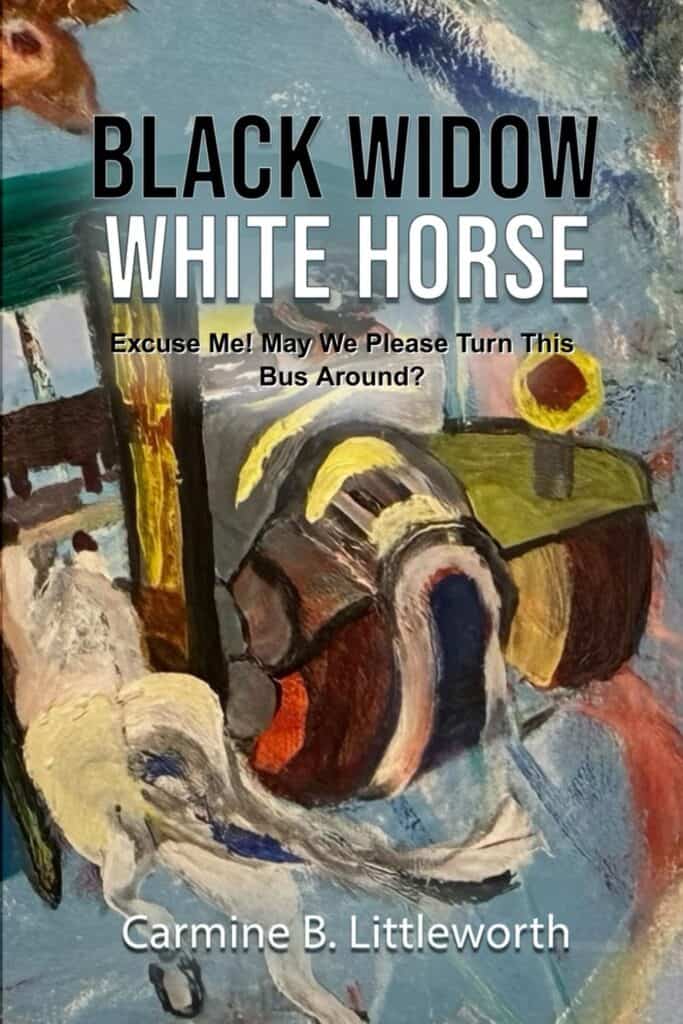
Carmine B. Littleworth weaves this truth through Black Widow White Horse, showing how homogeneity creates fragility and how difference, however uncomfortable, is what keeps communities alive.
The Science of Monoculture Collapse
Before we talk about culture, let us talk about crops. Agricultural science has repeatedly documented what happens when diversity disappears from a system.
- The Irish Potato Famine: Reliance on a single potato variety led to catastrophic failure when blight struck
- The Gros Michel banana: Once the dominant variety, nearly wiped out by disease and replaced by the Cavendish
- Modern wheat vulnerability: Genetic uniformity creates ongoing risk of widespread crop failure
- Forest ecosystems: Monoculture tree plantations are more susceptible to pests and disease than diverse forests
- The pattern: Uniformity creates efficiency in the short term and catastrophe in the long term
From Fields to Societies
The same principles that govern ecosystems apply to human communities. When everyone thinks the same way, dangerous blind spots develop.
How monoculture thinking fails societies:
- Problems are identified too late because no one sees them from a different angle
- Solutions are narrow because they come from a single perspective
- Innovation stalls because new ideas require friction between different viewpoints
- Groupthink takes over, silencing dissent that could prevent disasters
- Vulnerable populations become invisible to those making decisions
Why Diversity Strengthens Systems
Diversity is not a weakness to be tolerated. It is a structural advantage that makes organizations, communities, and societies more resilient.
The benefits of diverse perspectives:
- Better problem-solving: Different experiences lead to different solutions
- Increased innovation: New ideas emerge from the collision of different viewpoints
- Broader awareness: More perspectives mean fewer blind spots
- Greater adaptability: Diverse systems respond better to unexpected challenges
- Stronger legitimacy: Decisions made with diverse input earn broader trust
Cultural Humility Over Cultural Competence
You cannot memorize your way to understanding. Cultural competence, the idea that you can learn enough facts about a culture to master it, misses the point. Cultural humility is different.
What cultural humility looks like:
- Acknowledging that you will never fully understand another’s experience
- Approaching differences with curiosity rather than assumptions
- Recognizing your own cultural lens and its limitations
- Being willing to be corrected without defensiveness
- Understanding that learning is ongoing, not a destination
The Discomfort of Difference
Diversity is not always comfortable. Different perspectives create friction, disagreement, and the need to slow down and listen. This discomfort is a feature, not a bug.
Why discomfort matters:
- Easy consensus often means important voices are missing
- Friction forces examination of assumptions
- Disagreement can surface problems before they become crises
- Working through differences builds stronger relationships than avoiding it
- Growth rarely happens in comfort zones
Diversity in Practice
Valuing diversity means more than words. It requires structural changes in how decisions are made, who is at the table, and whose voices carry weight.
Practical steps toward genuine inclusion:
- Examine who is missing: Look at decision-making spaces and notice the gaps
- Redistribute power: Inclusion without influence is tokenism
- Change processes: Create structures that amplify marginalized voices
- Accept slower decisions: Real inclusion takes more time
- Measure outcomes: Track whether diversity leads to different results
The Stakes of Getting This Wrong
Homogeneous systems do not just underperform. They fail in ways that cause real harm to real people, often those already most vulnerable.
Consequences of monoculture thinking:
- Policies that work for some and devastate others
- Products designed for a narrow user base that exclude millions
- Medical research that ignores how treatments affect different populations
- Urban planning that serves car owners and abandons everyone else
- Justice systems are blind to their own biases
Diversity as Survival Strategy
Understanding why cultural diversity matters is not about being nice or avoiding offense. It is about building systems that work, that last, and that serve everyone. Monocultures collapse because they cannot adapt. Diverse systems survive because they contain within them the seeds of response to challenges not yet imagined. For a story that explores what happens when worlds collide and difference becomes the path forward, read Black Widow White Horse by Carmine B. Littleworth.